Medical disclaimer: This article is for general information only and is not medical advice. Ordinary DOMS is a dull ache that fades in days. Soreness with sharp pain, significant swelling, or unusually dark urine is not standard DOMS and needs prompt medical attention (see “When to Actually Worry” below).
Affiliate disclosure: This article contains an affiliate link to an amino acid supplement mentioned below. If you buy through it, we may earn a commission at no extra cost to you.
A hard leg day can leave you hobbling down the stairs for the better part of a week. If that sounds familiar, you’re dealing with DOMS — delayed onset muscle soreness — and if you’re wondering how to reduce DOMS after 40, you’re in the right place: it genuinely does hit differently at this age.
Here’s what’s actually happening in your muscles, why it lingers longer than it used to, and what actually helps.
What DOMS Actually Is
DOMS is the dull, aching soreness that shows up 12 to 72 hours after a workout, not during it. It’s triggered mainly by unfamiliar or unusually intense movement — eccentric work (the lowering phase of a lift, downhill walking) is the classic culprit — and involves microscopic damage to muscle fibers plus the inflammatory response that follows. That might sound alarming, but it’s a normal part of training: your body repairs the fibers, and they come back more resilient.
DOMS typically peaks around 24–48 hours post-workout and fades within about 3–5 days for most people. Soreness that arrives sharply and immediately during a workout, or comes with swelling, sharp pain, or dark urine, is a different situation — see the warning section below.
Why It Hits Harder and Lasts Longer After 40
The mechanics of DOMS don’t change with age — but several real physiological shifts make recovery slower and the soreness more noticeable.
Muscle repair slows down. The cellular repair processes that rebuild muscle fibers become less efficient with age, tied in part to declining growth hormone and testosterone (testosterone falls about 1% per year after 30–40, per Mayo Clinic). The damage from a workout is similar to what you’d get in your 20s — the repair timeline just stretches out longer. This is the same biology behind the longer rest windows in our guide to rest between workouts after 40.
Inflammation runs a bit hotter, longer. Aging is associated with a mild, chronic increase in baseline inflammation, sometimes called “inflammaging.” Layer exercise-induced inflammation on top of that baseline, and the combined effect can feel more pronounced and take longer to resolve.
Connective tissue is less elastic. Tendons and connective tissue lose some elasticity with age, which can make the strain from unfamiliar or intense movement feel more significant, and the recovery from it slower.
Recovery resources are often stretched thinner. As covered in our piece on BCAA vs EAA supplements, your body needs complete nutritional support to finish the repair process efficiently — if that support isn’t fully there, soreness can linger simply because repair hasn’t caught up yet.
What Actually Helps
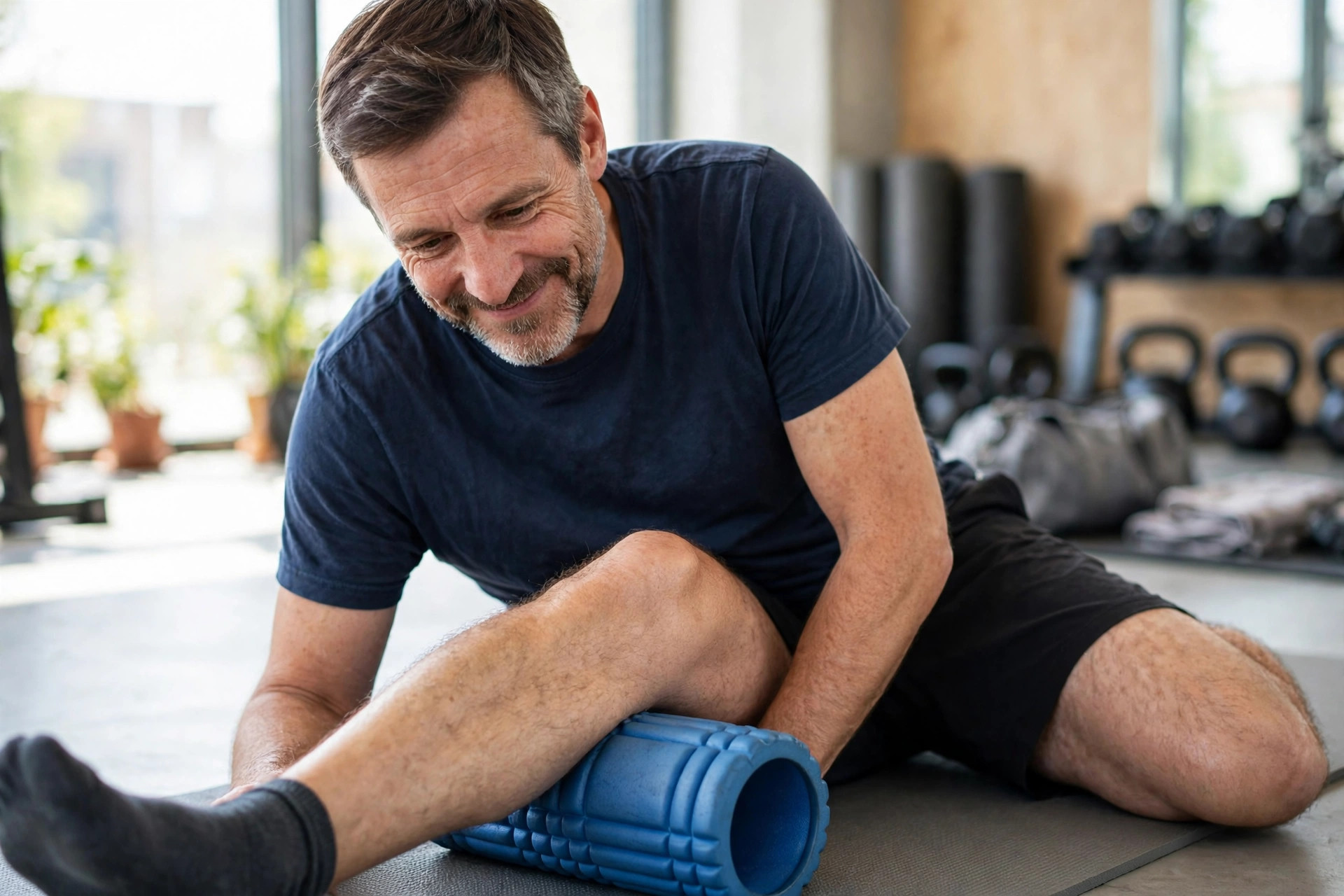
Keep moving, gently. Complete rest isn’t usually the fastest path through DOMS. Light movement — an easy walk, gentle stretching — brings blood flow to sore muscles and tends to ease stiffness faster than sitting still.
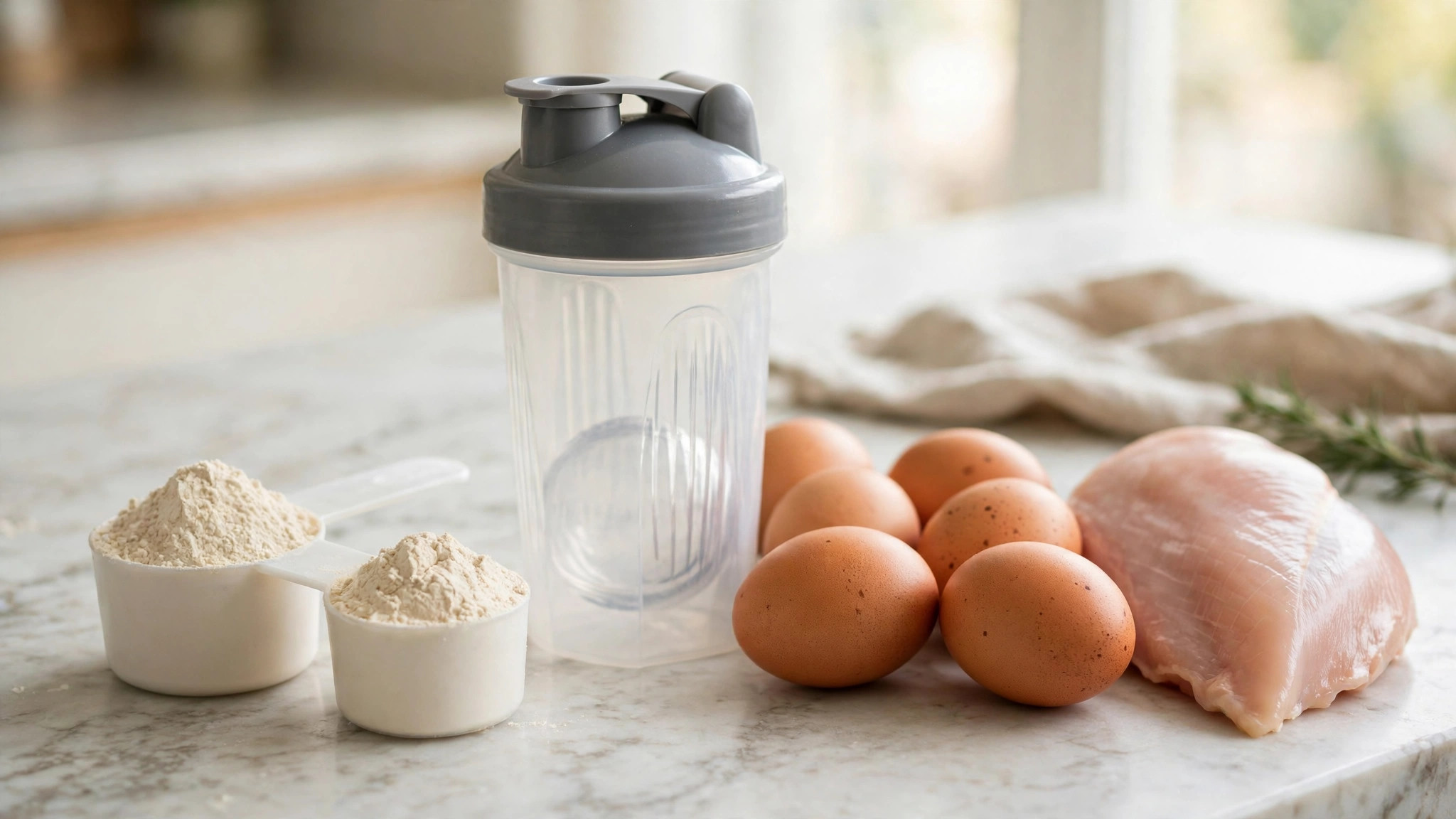
Prioritize protein and complete amino acids. Since repair is the whole mechanism behind DOMS resolving, giving your body the full set of building blocks matters more, not less, as the natural repair process slows. Food first — targets are in our protein guide — and for men who struggle to hit them, Advanced Amino Formula is one supplement option built around providing a complete essential amino acid profile. It fills a nutritional gap; it doesn’t replace the protein, sleep, and sensible training around it.
Hydrate consistently. Dehydration is an overlooked factor in slow recovery. A simple guideline is roughly 8 ounces of water for every 15–30 minutes of exercise, adjusted for heat and how much you sweat.
Prioritize sleep. The bulk of muscle repair happens during deep sleep, when growth hormone release peaks. Skimping on sleep after a hard workout genuinely extends how long soreness sticks around — one more reason our sleep guide treats sleep as training infrastructure.
Use heat or cold strategically. A warm bath can relax tight, sore tissue; a cold pack can numb sharper discomfort. Neither is a cure, but both can ease the day-to-day experience while your body does the actual repair.
Don’t chase soreness as a badge of honor. A common mistake at any age, but especially after 40: assuming more soreness means a better workout. It doesn’t. Consistent, moderate progressive overload builds strength more reliably than repeatedly pushing into extreme soreness, which mainly extends recovery without adding proportional benefit.
When to Actually Worry
Standard DOMS is uncomfortable but not dangerous. Pay attention if soreness comes with sharp, sudden pain rather than a dull ache, visible swelling or bruising near a joint, pain that isn’t improving after 4–5 days, or unusually dark, cola-colored urine — that last one can be a sign of a rare but serious condition called rhabdomyolysis, which needs prompt medical attention.
Frequently Asked Questions
Is it good to be very sore after a workout? Not necessarily — soreness indicates you challenged your muscles, but more soreness doesn’t equal a better workout. Consistent, moderate training builds strength more effectively than repeatedly pushing into extreme soreness.
What helps sore muscles after exercise the most? Light movement, adequate protein and complete amino acids, hydration, and sleep are the most consistently supported approaches. No single remedy eliminates DOMS, but these genuinely shorten and ease it.
Should I work out again if I’m still sore? Mild, dull soreness is usually fine to train through, especially with light movement or a different muscle group. Sharp pain, or soreness that limits your range of motion, is a signal to hold off until it eases.
Do sore muscles mean you’re building muscle? Soreness indicates muscle fibers experienced stress, which is part of the growth process — but it’s not a requirement. You can build muscle effectively without significant soreness every session, particularly once your body adapts to a routine (the “repeated bout effect”).
The Bottom Line
DOMS after 40 isn’t a sign something’s wrong — it’s your body’s normal repair process running on a slower, age-adjusted timeline. The soreness itself isn’t the enemy; what matters is giving your body what it needs to complete the repair: movement, sleep, hydration, and enough protein and amino acid support to finish the job your muscles are trying to do.